
Pool Filter Repair on Oahu
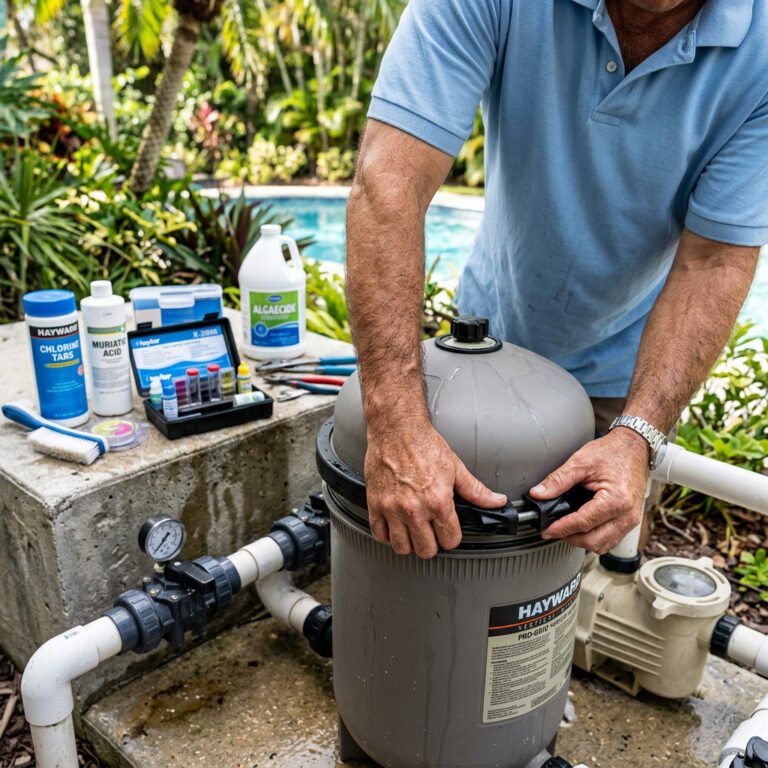
Cartridge, sand, or DE — the licensed, insured pros we work with clean, repair, and replace pool filters across Oahu.
Get a Free Quote
Tell us what your filter is doing and we’ll connect you with the pros we work with.
The filter is the part of a pool system most people think about least, right up until pressure spikes, water turns cloudy, or debris starts making it back into the pool. Which filter type you have changes what “normal maintenance” looks like — and changes what a real problem looks like too.
The Three Filter Types
Cartridge filters
The most common residential filter type. Water passes through a pleated fabric element that traps debris. Easy to clean, but the cartridge itself is a wear item — even well-maintained cartridges typically need replacing every year or two, more often on a heavy-debris Oahu property.
Sand filters
Water passes through a bed of specially graded sand. Simple, durable, and backwashable, but the sand media itself loses effectiveness over time — typically good for several years before it needs replacing, even though the tank and valve can last much longer.
DE (diatomaceous earth) filters
The finest filtration of the three, using a powder coating over internal grids. DE filters need periodic powder recharges after backwashing, and the grids themselves eventually need replacement as they age or tear.
Signs Your Filter Needs Attention
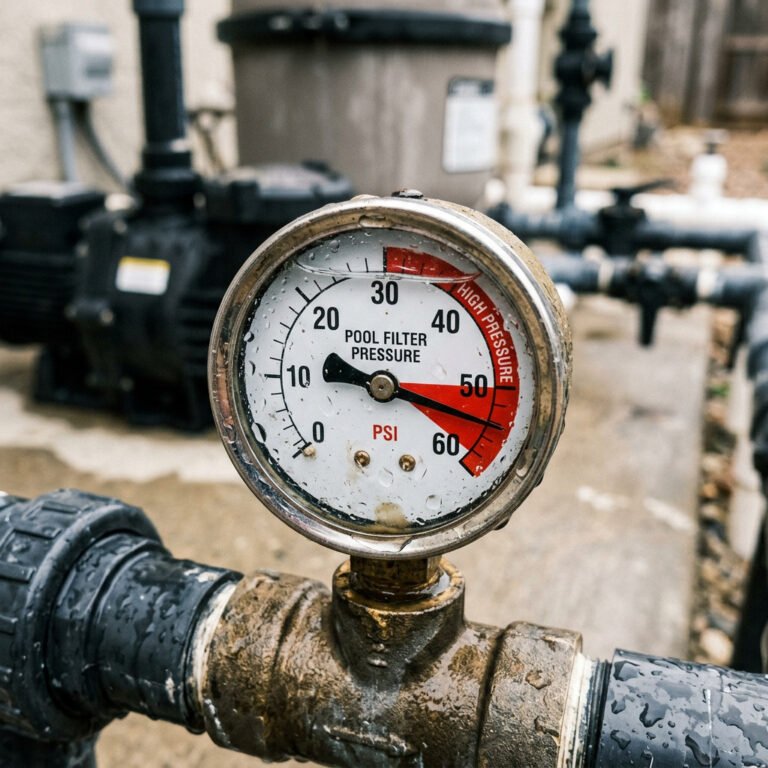
The pressure gauge is the single best diagnostic tool a filter has, and it’s worth actually knowing your own numbers rather than guessing. Right after a filter is cleaned and the system is running normally, note the pressure — that’s your baseline. From there:
- Pressure gauge reading noticeably higher than it was right after the last cleaning — a rise of roughly 8–10 PSI above your filter’s clean starting pressure is the general signal it’s time to clean or backwash
- Cloudy water despite chemistry testing balanced
- Noticeably reduced water flow from the returns
- Visible cracks, warping, or leaking around the filter housing or valve
- Needing to clean or backwash much more frequently than before, without an obvious cause
- Sand or DE powder appearing in the pool water — a sign of a failed lateral or grid
Clean, Repair, or Replace?
Filters don’t fail all at once — they degrade, and the right response depends on where in that curve the filter actually is:
- Clean or backwash when pressure has risen but the filter media itself is still in good condition. This is routine maintenance, not a repair.
- Repair when a specific component fails — a cracked lateral, a torn DE grid, a leaking valve — while the rest of the system is still sound.
- Replace the media or cartridge on schedule, even if nothing’s visibly wrong. Cartridges typically need replacement every 1–2 years, sand media every several years, and DE grids as they age or tear — waiting until performance visibly drops usually means it’s overdue.
- Replace the whole filter when the tank, valve, or housing itself is cracked or corroded beyond a reasonable repair cost, or when a filter is undersized for the pool it’s serving.
Why Oahu Filters Work Harder
Tropical debris load
Plumeria, monkeypod, mango, coconut and palm frond, and albizia all shed differently than mainland leaf litter — heavier and more likely to clog a filter fast, the same debris load that drives up cleaning frequency on weekly service visits too.
Year-round pool use
More swimming means more bather load — sunscreen, body oils, and organic material all add to what the filter has to trap, with no seasonal slowdown to give it a break. A mainland pool that sees heavy use for three or four months a year and sits mostly idle otherwise puts a fraction of the cumulative load on its filter that a pool used year-round does.
Salt air on housings and valves
Filter tanks, multiport valves, and pressure gauges are all exposed to the same coastal corrosion that affects every other piece of pool equipment on this island — another reason a filter housing here may need attention sooner than an equivalent mainland installation.
What’s Included in a Filter Service Visit
- Pressure gauge assessment against the filter’s known clean-start pressure
- Inspection of the filter type-specific components — cartridge condition, sand media, or DE grids
- Cleaning, backwashing, or DE recharge as appropriate
- Diagnosis of any leaks, cracks, or valve issues
- A clear recommendation on whether the filter needs cleaning, a component repair, media replacement, or full replacement
What Filter Repair Costs on Oahu
Cost depends heavily on which of the four categories above applies:
- Cleaning or backwashing is the least expensive, often bundled into a weekly service visit rather than billed separately
- Cartridge replacement is moderate and predictable, since it’s a scheduled wear item rather than an emergency repair
- Sand or DE media/grid replacement costs more but happens far less often
- Full filter replacement is the highest cost, but usually only necessary when the tank or valve itself has failed
Who This Is For
- Homeowners noticing rising pressure or cloudy water
- Weekly service clients whose pro flagged filter wear during a routine visit
- Anyone with a heavy tree canopy over their pool dealing with above-average debris load
- New homeowners wanting to know a filter’s real condition and remaining service life
Related Reading
For pumps, heaters, salt cells, and automation, see Pool Equipment Repair on Oahu. For the broader repair-or-replace framework, see the Pool Repair overview.
Frequently Asked Questions
How do I know if my filter needs cleaning or a real repair?
Pressure is the best signal. A rise of roughly 8–10 PSI above clean starting pressure usually just means it’s time to clean or backwash. If cleaning doesn’t bring pressure back down, or the same issue keeps recurring quickly, that points to a repair or replacement need instead.
How often should a cartridge filter be replaced?
Typically every 1–2 years, even with regular cleaning — sooner on a property with heavy tree debris.
What’s the difference between cleaning and backwashing?
Cleaning (removing and rinsing a cartridge, or hosing down DE grids) and backwashing (reversing water flow through a sand or DE filter to flush trapped debris out through the waste line) are both routine maintenance — which one applies depends on your filter type.
My filter is leaking. Is that a quick fix?
Often, yes — a leaking valve or o-ring is usually a contained repair. A cracked tank is a bigger conversation about repair versus full replacement.
Which filter type is best for an Oahu pool?
All three work here, but given the debris load on many Oahu properties, filtration capacity and how easy the filter is to clean frequently are both worth weighing alongside the type itself — your pro can advise based on your specific yard and tree coverage.
Can a bad filter cause cloudy water even if my chemistry is balanced?
Yes. Chemistry and filtration are two separate systems, and a filter that isn’t actually trapping fine particles will leave water cloudy no matter how well-balanced the water chemistry is.
Filter acting up? Call or text 808-517-5612, or request a free quote below.